Helping Our Clients With GDPR

Do you know what personal data you are storing and where it is stored? Do you have a policy for managing this data?

The 25th May is looming…

The deadline for being compliant with the new GDPR legislation is the 25th May 2018. From discussions with a lot of our clients this is something that is confusing, a little scary and something they are struggling with. There are a variety of experts out there with a variety of opinions, largely because the legislation has not yet been tested in practice and the guidance is developing on a constant basis.

How is it affecting us?

Well it appears there are two terms to describe people or businesses who hold data, a Data Controller and a Data Processor. Luckily for us at Sokada we are both… perfect!

  • We are a data Controller for the information we control; ie the names and contact details for our clients and their personal data.
  • We are a Data Processor when we process data for our clients ie your client’s customer data, which we can access to our clients’ websites.

This has meant extra work for us as we have had to update our Terms & Conditions, which all of our clients will now have to sign, agreeing that they will comply with our GDPR policy and are managing their data properly.

Help With GDPR

Getting the right policy

One of the key requirements seems to be a GDPR Privacy Policy. We are not sure how many businesses actually write their own policies, and whilst we do not condone the practice in reality, we all know many organisations “borrow” a policy from another organisation and “tweak” a few bits and believe their work is done.  This may not be enough for GDPR

In the past we have had a EU Cookie law which seemed almost as useful as an overly bent cucumber or chocolate that isn’t chocolate… EU law for the sake of it. But GDPR seems to be much more detailed. We are not sure how they will ever police many of the issues, but it has to be taken seriously. It’s also VERY important that we manage personal data properly.

So, the Privacy Policy now seems to be even more important. It should be used to detail and set out how personal data is processed as well as how it will be managed going forward. A bit like a Health & Safety policy where you have a plan for specific events; “in case of fire go to the fire door…”

Your Privacy Policy could state that once an online order has been processed you will delete any personal details within a specific time frame. Obviously one of the key elements to this is sticking to it and actually managing the data how you have said you will.

No one can you tell you exactly what 100% GDPR compliance looks like, as it means many things to many organisations. However, having a GDPR privacy policy is a good place to start. Just having a policy in place and keeping to it will be a positive thing and will reflect on the business favourably if there are any issues with GDPR.

A few simple tips to developing your policy

Firstly, sit down and work out the many different ways you process personal data, this includes, customers, employees, consultants, and suppliers. We have been looking at this from a website point of view as that’s one of the key areas where we process data.

Here are a few things to consider:

  • Website forms
  • Shop orders
  • Emails

Yes we know they are pretty obvious, but one thing we discovered is that a lot of our clients don’t really use the CMS (Content Management System) on their website. What our clients didn’t know was that when someone completes an enquiry form it stores a copy of that form online in the CMS. The same goes for online orders from the shops we manage. The client receives an email when an enquiry or order is placed and they just assume that is it. Even though we go over the CMS with them when we launch the site and have trained them in how to use it.

So, many customers are storing customers data in places they weren’t aware of. If this is you…. you will need to think about how you will be managing this data under GDPR?

How are we trying to help?

At Sokada we build our clients’ websites using WordPress in the same way that we designed our own website; we use very similar systems. We should be processing similar data and have the same issues. We have been trying to look at GDPR in a practical way that will enable us to help our clients.

To enable Sokada to comply with GDPR we need our clients to comply with GDPR.  To assist our clients we are therefore permitting you to use our revised T&C’s and our GDPR privacy policy as a template to base your own T&C’s and GDPR policy on. If you are interested in using them please contact us.   This is not legal advice from Sokada and you will need to amend them to reflect your specific needs and of course continually manage the data in accordance with the policy, but it’s a good start and better then starting from scratch.

Your GDPR policy is not set in stone, it must develop as your business does, diversifying and growing alongside it.

Sokada is committed to managing its way through the minefield that is GDPR and we are supporting our clients to achieve the same.

Why Network?

As a small business, it is vital that your brand is getting as much coverage as possible. You need to know that other local businesses a: know about you and b. know what you can do to help their business grow. Networking is a great way to do this as it puts you directly in front of many potential customers. As soon as you bag your first customer it will really prove the importance of networking!

A lot of Sokada’s business comes from networking. It works perfectly, as we can connect with many local businesses, building a network of people who may be able to take advantage of the tools we have in our arsenal for business growth. And it can also be an ongoing cycle – we work well with one business, they will hopefully refer us to other local businesses. One opportunity will definitely lead to others; exciting times!

The Importance of Networking

Shared Knowledge

It is also about shared knowledge. One thing we love to do at Sokada is help other businesses grow. And the customers we have worked with on both their websites as well as ongoing SEO, will vouch for us (we hope!). By networking within an effective group, you can get feedback on your work, share information as well as seeing things from a different perspective. Current legislations can also be shared, such as GDPR, SSL certificates, health and safety etc etc. Find out lots of ways to help your own business, by everyone helping each other.

Give Something Away

Make an offer to your fellow networkers. Give something away for free, to show you are an expert in your field. If people try you and you are good, then they will use you again, or refer you to someone else who needs your services.

Be the “Go To Guy”

Grow connections within a networking group – but see who they know too! Get your name out there as the “go to guy”and then people will come to you. They will start to know who you are, recognise your skills and you will receive increased credibility in your specialty.

Meet new people, grow in confidence and realise you ARE good at what you do, you CAN stand up in front of 20+ people and you WILL push yourself more in business.

If you are looking to connect with new customers by networking, you may have to have a few early morning starts, but if you pick a good group then it is so worthwhile and really proves the importance of networking.

If you are local to us and would like to start networking with other like minded people then please get in touch.

Where do you start?

Google Adwords can be a bit of a beast. It can also swallow your money before you even realise, if you don’t have the detail in your campaigns set up correctly. There are so many nuances to Google Adwords and it is vital you ensure everything is set up to the best of its ability, so you can make the most of your budget. So if you are new to Google Adwords, then think and plan carefully.

Some agencies will claim to run your Adwords campaigns. They say they will monitor the performance and ensure you are at the top of your game. However many, especially some of the large national companies have the same strategies that are applied to each project and the reporting you receive on a regular basis will be of little use for your marketing. Your spend means nothing to them; you give them what your daily budget is and they will spend it!

Google Adwords

How we approach each new project

At Sokada, we work on each project totally separately. We carry out the keyword research and start the campaign tightly, ensuring there are no obvious issues. We will then gradually broaden our searches to give our customers the most of the clicks through to their website. We add extensions to the adverts, giving prospective customers the ability to click through to various areas. We also check the actual search terms that have been made – initially on a daily basis, to keep an eye on the exact searches made. We ensure your ads are only showing in the geographic areas and times required and the adverts are relevant, easy to read and are all spelled correctly! You would be surprised how many ads have bad spelling in them or are factually incorrect!

And we start each campaign with as many negative keywords as possible. These are absolutely VITAL and much thought needs to go into this to ensure you hit the ground running with correct and relevant keyword terms.

How much to spend on Adwords?

You must expect to spend a bit of money on your Adwords campaign. If you have very little budget, then you will probably not see many conversions on your website. Set your daily budget and when that runs out, your ads will disappear until the next designated day.

Make sure you decide first which hours of the day you are going to show your ads as well as which days of the week. A lot of money can be wasted unnecessarily by showing your adverts 24/7. If budget is tight, then try and limit your ads to the time of day when people are most likely to be searching for your products or services.

Want to know your conversions?

Conversions are vital with an Adwords Campaign. You want to see some return on your investment. If you have an online shop, then this is quite an easy conversion to set up. However, if you have an information or brochure website, then you need to think about what you would class as a conversion. Would it be the amount of time someone spends looking at your website or perhaps the number of pages they have visited within your site. Could it be once they have visited a specific page, or perhaps contacted you. It is totally up to you what a conversion will mean for your business; you can even assign a monetary value to each goal, giving you an effective cost per conversion figure.

One of the easiest ways to do this is to import your goal conversions from your Google Analytics account – so make sure this is set up first and then link the accounts.

Your Click Through Rate (CTR)

Based on the percentage of people clicking through to your website where you advert has shown up (Impressions) is normally less than 10%, then you must allow for some wasted money on this.  The average click-through rate on AdWords paid search ads is about 2%. Therefore, anything over 2% will be considered an above average CTR.

A low Click Through Rate (CTR) can mean your ad isn’t compelling enough to get people to your landing page. Or it could be based on a low Quality Score. Quality score is the value Google puts to the specific keyword phrase compared to the text within the specific website landing page – is it applicable? Use keywords within your ad group that really match well with the page you are directing your advert to. Having a low CTR can negatively impact your Quality Score, which makes your campaign less cost-effective.

So…how do you want to play this?

We could talk about Google Adwords all day – if you are new to Google Adwords, there is so much information to be told and to be honest, it can prove a little scary if you have never dipped your toe into this exciting world. Many of our customers have had a go themselves, thinking “how hard can it be?”. But be aware, you can lose your money quicker than on a roulette table if you don’t set up your campaign properly from the outset. So why not let us set up your Google Adwords account and manage it for you. We will send you regular reports, showing your spend, the search terms people have made (very important) as well as any other information, vital for your business. We have many regular customers who trust us to do the best job possible with their money…

Adwords can be updated very easily and the changes can be seen online fairly quickly, unlike organic marketing, which can take days or sometimes weeks. So it is ideal if you want to get your services or products out there, for the world to see. Just please be careful if you have a go yourself…

And then we have Google Shopping….but that’ll be another blog post 😉

So you’ve launched your website, you’ve planned your local content, and you’ve set up Google Reviews. What next? Claiming your name on social media of course!

How to claim your name successfully…

Not only will claiming your name on social help you in search results but you can protect your brand by securing your username. A good place to start is to reserve your name on popular networks such as Instagram, Facebook, Twitter and Pinterest. As a general rule you should create all these accounts with a neutral email account such as info@sokada.co.uk or social@sokada.co.uk.

Even if you don’t plan to use your accounts right away, it’s best to claim your name over the most popular networks first so that you can stop anyone else claiming them. Keep your name short, snappy and easy to spell, for example, don’t include a random series of letters or numbers after your name. On Instagram someone had already claimed @sokada, so we used @sokadauk. This makes sense as we are based in the UK! Most networks also have a character limit, so keep this in mind too, you may need to abbreviate.

Be consistent…

It’s also best to keep your name the same across all social networks to ensure consistency. So if your name on Facebook is ‘yourbranduk’, it should also be ‘yourbranduk’ on Twitter, Instagram and so on – so make sure they’re available before going ahead.

If you do find that someone has already claimed your name and is using your logo or other assets then they could be violating the site’s trademark policy. You can generally report this to the social platform. However, if the user isn’t violating any trademark policies, you will just have to find an alternative that is in line with your brand, or you could always ask them nicely to change their name.

It’s all in the detail

Next you need to set up your profiles with your business details, location, and website information. It’s really important to complete these fully – making no effort to do this reflects poorly on your brand – so make sure you sit down and set aside some time to do it. Include all these new social links on your website too so visitors can click through to your pages and stay connected with you long-term.

Last but not least, be sure to post any content from your blog to your social feeds. If you go on to promote these on your social platforms, you can generate a nice steady stream of visitors to your website, thus increasing the chances of converting a visitor into a customer.

If you’re not sure how to get going with social media then give us a call on 01435 817226 or drop us an email and we can give you some guidance on how to get started!

Why is this so important?

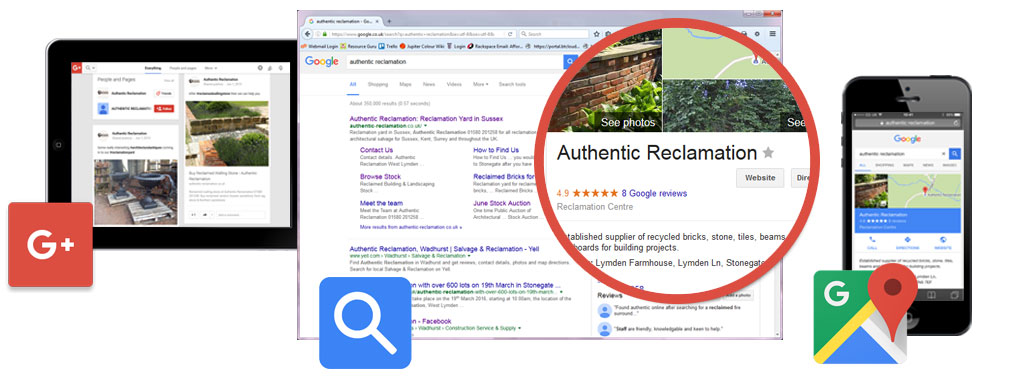
It has never been more important than now to get your customers to review you on Google. Many companies are now learning about the importance of marketing their business online and are discovering that Google reviews are really vital for them, in helping their business succeed. But how do you get people to review you on Google?

It’s not the easiest thing to do and the most ideal way is to let it happen organically. But that doesn’t always happen does it! Customers always love to complain about services or products, but they don’t always jump at the chance to say something nice.

As we are in this industry we realise the importance of online Google Reviews and will review businesses who we believe deserve one. It’s an important part of being found for Local SEO and the more good reviews you get the better. You are more likely to be contacted if you have a bunch of 5 star reviews than your competitor, who may have none.

How Do You Get People To Review You On Google

What are the next steps?

So start asking your customers! It’s as simple as that! Approach each one and personally ask them to post a quick review – it takes seconds to do, but can be invaluable to your business! Don’t just send out a generic email – make it personal so you are asking them – they may not do it otherwise. And even if you contact 20, you will still only get 2 or 3 – the conversion rate is never brilliant.

Any contacts who you have done business with or knows of your business and has had dealings with you could be asked. It really doesn’t have to be just your customers. It could be businesses who sell to you too – if they find you professional, courteous and downright brilliant then ask them too! It will give any potential customers a good overview of you as a business.

If you like reading our posts and have a Gmail account then please place us a quick Google review!

What to do if you get a bad review

Sadly, there will always be people who will run you down. It’s an annoying fact that as we said before, people like to complain. And, unless it is abusive, you cannot remove a bad review. There are two things you can do to combat this however:

  • Respond to this review, explaining your situation in a polite way, so people can see you have taken action
  • Gain loads of great reviews, so they more than outnumber the bad one and it will gradually drop down in the listings, the older it gets

What’s the downside?

You need to have a GMail account to place a review. Many people have them and they are totally free and very quick to set up which is ideal. And a company may still have a gmail account if they indeed, have claimed their Google My Business listing. But this is the frustrating truth – you won’t be able to place a review without one.

If you have a database of clients, probably the easiest way to start is sort them into a list of whoever has a Gmail account and contact these people first – you will get a higher response.

Ask Ask Ask

Remind people to write you a review – the more you have the better. At Sokada, with all our online marketing clients, this is something we consistently do for them – we ask their clients. Local marketing is vital, especially if you are targeting a local market. Don’t just stick at 5 reviews, get as many as you can. Whenever you gain a new client, then ask them to review you. Keep on top of it and it will become second nature.

Don’t let your competition beat you!

If you like reading our posts and have a Gmail account then please place us a quick Google review! (we have got to ask, haven’t we…)


Local Search

More and more people are using the web to look for local businesses, many of them using mobile devices to do so. Local search engine optimisation is really important if you want to stand out from the crowd, here are a couple of things you can do, to help you achieve this…

  1. Claim your Google My Business Page and Bing Places For Business
  2. Claim local name, address and phone number citations and listings in local directories online.
  3. Get people to leave ratings and reviews on Google Reviews
  4. Claim your name over all social media platforms
  5. Produce relevant local content

Local Content

Local content is probably the best way to improve your visibility and rankings in local search results. If your main customer base is local to you, you need to include local keywords, this will help narrow your competition and help you come out on top.

When writing content, make sure you include places that are local to you. For example, Sokada is based in Heathfield, so you will include Heathfield and other areas close by to this location in your pages content and blog post pages. The content needs to make sense though, don’t try to insert as many instances of it as possible! Also consider how you can link your business to relevant local news or industry stories, this will help you get further to the top of the search results.

It’s also important to know who your audience is, so that you can get your message in front of the right people. Sometimes the best way to do this is to utilise Facebook’s audience insights to identify demographics and interests of your potential audience. You can also look at Google’s Keyword Planner to see how certain keywords are performing and Google Analytics to see what your current traffic data is like.

However, despite all this, local content isn’t just a blog post; it’s also the other four things we’ve mentioned above and then some. Share user-generated content (the good stuff your customers post about your business), get people to review your business and share those too, be sure to post your blog content to all social media platforms you’re on. Maybe even promote some of the posts too. Social media is pretty crucial so make use of it!

More detail to come on the above 5 points…

If you’re not sure where to begin with SEO then give us a call on 01435 817226 or drop us an email and we can give you some guidance on how to get started!

Utilising Chatbots

As defined by Chatbots Magazine, “a chatbot is a service, powered by rules and sometimes artificial intelligence, that you interact with via a chat interface.” Chatbots have revolutionised the way businesses connect with customers and have enhanced their purchasing experience massively. Currently there are over 100,000 monthly active bots on Facebook Messenger with that number set to increase in 2018.

social media trends

Small business can tap into this trend to help answer basic questions, generate feedback directly from customers and even take orders. Chatbots are relatively low-cost, but give brands the chance to interact quickly with their audience in a way that feels personal.

Key point: Improve the customer experience by using chatbots to interact quickly with them.

The art of storytelling

Another trend that small businesses need to capitalise on is ephemeral content. Ephemeral content is generally short live videos or photos that tell a real-time story. Snapchat, Facebook and Instagram all enable you to create this kind of content. This content appears for 24 hours and then disappears, never to be seen again. It has proven to be extremely popular throughout 2017 and no doubt will continue to be so into 2018.

Businesses and influencers are using this trend to their advantage as it gives them the opportunity to be original, authentic, tell a story in real-time and increase engagement all over mobile. Followers do not want to miss out on content that disappears in 24 hours so they keep coming back for more, just so long as it’s high-quality of course, so planning is key.

Key point: Make the most of both your social media channels and ephemeral content but be sure to build a content strategy for both.

Get the most out of Social Influencers

Small businesses need to consider social influencers to aid them in their digital marketing efforts in 2018. Social influencers are people on social media platforms, sometimes celebrities, that have a large following who have established credibility in a specific industry. A social influencer has access to an audience that a business doesn’t necessarily have access to and can persuade this audience to buy a certain product or service.

Social influencers will generally be given products to promote or be paid to promote a product to their audience via their social profiles. However, it’s really important to note that social media users have become disenchanted with top level influencers who get paid to promote products and are really looking for authentic brand advocates, those social influencers who already like the product and use their product or service in real life. Brand advocates tend to be those who have a following under 10,000.

But why not go big I hear you ask? Well for one, these big influencers tend to cost money. Many small businesses simply don’t have the budget for this, whilst those with a smaller following and, on the plus side, like your brand, will love receiving your product or service from you in return for starting up a conversation about your business. This is great as not only are you spending less but you’re also solidifying your relationship with those who matter. If that wasn’t all, those with a smaller following tend to have higher engagement, therefore it is much more cost-effective for businesses and allow for a more targeted approach.

Key idea: Build relationships with brand advocates with a following and get them talking about you.

If you are looking for advice or support on how to take your business forward in 2018 with the aid of social media, why not give us a call on 01435 817 226 or email enquiries@sokada.co.uk.

The do’s and don’ts of being a business on Instagram

Instagram is big business, particularly if you’re a business on Instagram. It’s one of the fastest growing social media networks and one not to be ignored! If you’re thinking of creating a business profile here are a few do’s and don’ts to help get you started…

How To Be Successful on InstagramDon’t…

buy followers

Perhaps the biggest sin of all Instagram sins is the purchasing of followers. Just don’t. It looks terribly obvious as engagement rates are poor compared to follower numbers. Six likes to one photo and ten thousand followers… Oh dear. You want real followers engaged in what you’re posting about, after all it’s quality not quantity and the end goal is to turn followers into customers. Purchased followers are just not interested.

…just promote what you do, use the 80:20 rule

80% of your content should be focused on educating, enlightening and engaging your audience; 20% should be self-promotional. So don’t just push product, have a bit of fun – encourage user-generated content, use competitions, tell a story. Followers will not engage or keep following you if it’s all me, me, me.

unfollow once you’ve been followed

We see this often. People follow you, wait for you to follow them, then unfollow. They’re hoping no one will notice so that their follower base will grow whilst their following list doesn’t. The goal here is to look super popular; however, they will always be found out and followers will unfollow once they realise, meaning they’ll have high turn over of followers, poor engagement and poor chances of converting a follower into a customer.

post personal photos if you have a business account

There is nothing worse than heading over to what you thought was a business profile but all of their pictures are of dogs and what they had for breakfast. Ok the former isn’t so bad if you’re a dog lover, but still, not what you had in mind when you visited their profile. If you’re a business, start a business account from fresh, don’t turn your personal profile into one.

put links in your captions

Links in captions don’t work and no one will want to take the time to type a link out. The only place that a link is clickable is in your profile so that’s where you will put it. Use photo captions to tell your story, include relevant hashtags and your call to actions. Always send them to the link in your profile.

Do…

plan

It’s really important to know what you are going to post about, how often you’re going to post and whether you’re going to use images or videos. It’s also important to know what theme the images will have such as colours and fonts, which should really complement or match your branding. Ideally you will create a content calendar for your posts so you know what you’re going to post when, it makes life so much easier and will provide you with a consistent brand message and image.

tell a story

Think of your Instagram profile as a micro-blogging site where you can tell your story. You need to engage with your audience so the photo caption needs to have more than a few words to keep their attention. Include hashtags so your posts are searchable but don’t #hashtag within the text, do it at the end like this… #instagramtips #instagramlessons

…research relevant hashtags

It’s important to go for popular hashtags that are relevant to your business and it’s super easy to find out what hashtags you should be using.

  • You can check out the competition and see what kind of engagement they are getting.
  • Use a third party tool to see what is big in your industry
  • Check out Instagram’s own suggestions when you start to type in a hashtag. They will give you an idea on how many times they have been used. Although don’t just go for the most popular. Hashtags with the biggest number of uses also means you’re up against a lot of competition to be seen.

Don’t forget you have 30 hashtags to play with. We’re not saying use all 30, but definitely make the most of them.

switch up hashtags

It is just a rumour but it has been said that using the same hashtags over and over again in the same pattern can make Instagram think you are spamming or a bot meaning you could be banned or penalised. Variety is the spice of life so change it up every now and then.

be authentic, be real

You need to separate yourself from the spam and bot comments of Instagram by being authentic. You can generally spot a bot or spammer a mile off as they will generally reply with a cliche phrase like ‘love it’ or ‘this is great’… Snore! Make sure people know you’re real by being real, in turn you’re more likely to get a response or a follow back.

So that’s just a little taster on the do’s and don’ts of Instagram for business. however there’s so much more to think about on how to be successful on Instagram. If you’re not sure where to begin then give us a call on 01435 817226 or drop us an email and we can give you some guidance on how to get started!